Open-Source PET Pulltrusion Machine
3D Printing PID Control Electronics CAD Modeling Sustainability

Overview & Purpose

The Pulltrusion Machine is an open-source filament extruder designed to convert discarded PET bottles into high-quality 3D printing filament. By repurposing plastic waste, this project reduces environmental impact and provides makers with an affordable filament source.

Commercial filament can be costly and contribute to landfill waste. The Pulltrusion Machine addresses this by:

  • Recycling used PET bottles into usable 3D filament.
  • Lowering material costs for small-scale and hobbyist applications.
  • Promoting sustainability within the maker community.

Design & Development

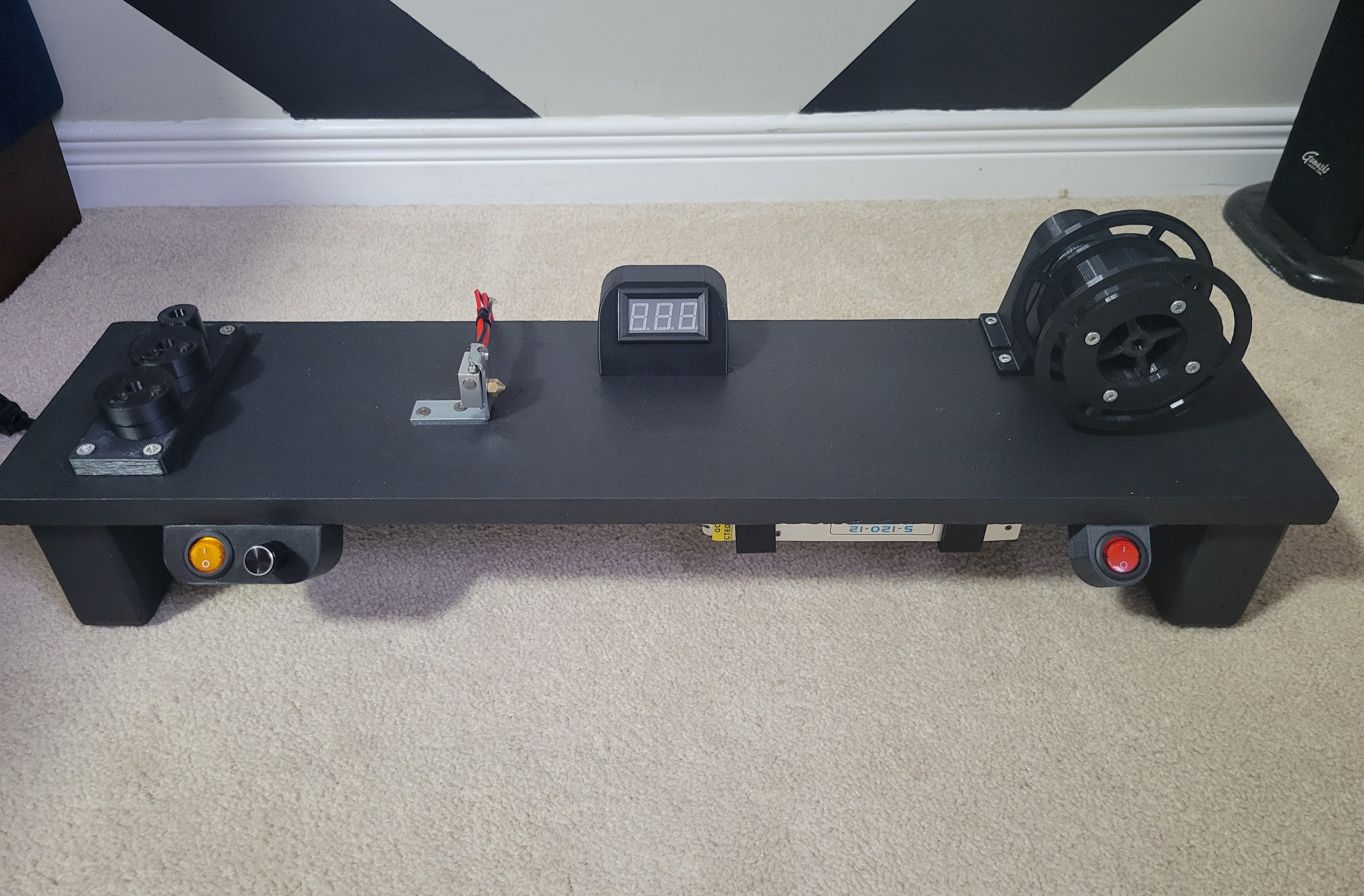
Initial Prototype Frame and Components

Based on the PETamentor design, the Pulltrusion Machine emphasizes efficient heating and a controlled puller system. Key development milestones:

  • Prototype Frame: Built from aluminum profiles to maintain alignment between cutter, heater, and puller assemblies.
  • Cutter Mechanism: Designed a rotary cutter to slice bottles into uniform ribbons for consistent melting.
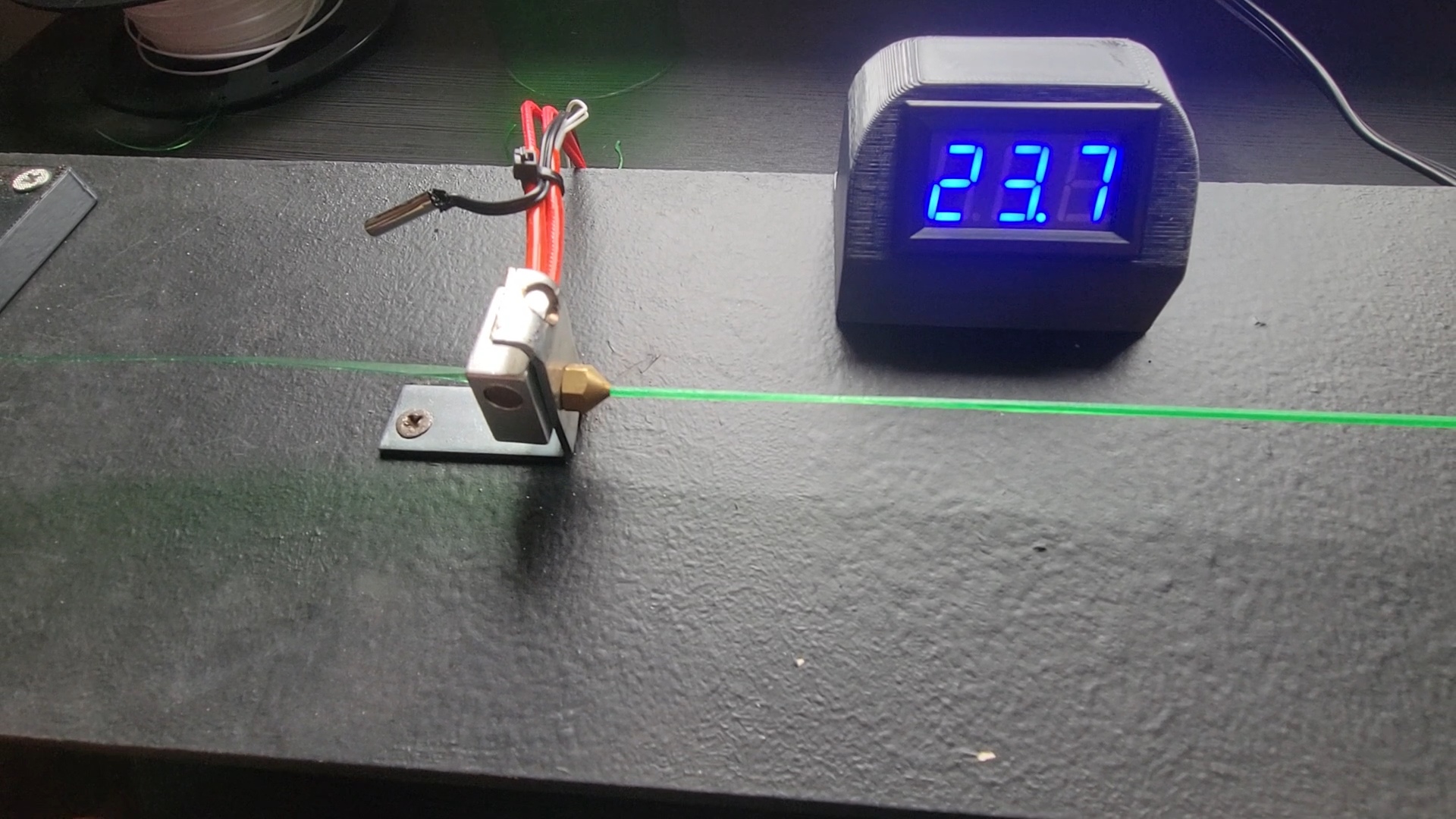
  • Nozzle & Heater: Tested optimal filament diameter of 1.75 mm, optimizing heater cartridge placement for uniform temperature.
  • Puller Calibration: Iterated on motor speeds using a JGB37-520 high torque geared motor with 7 rpm.
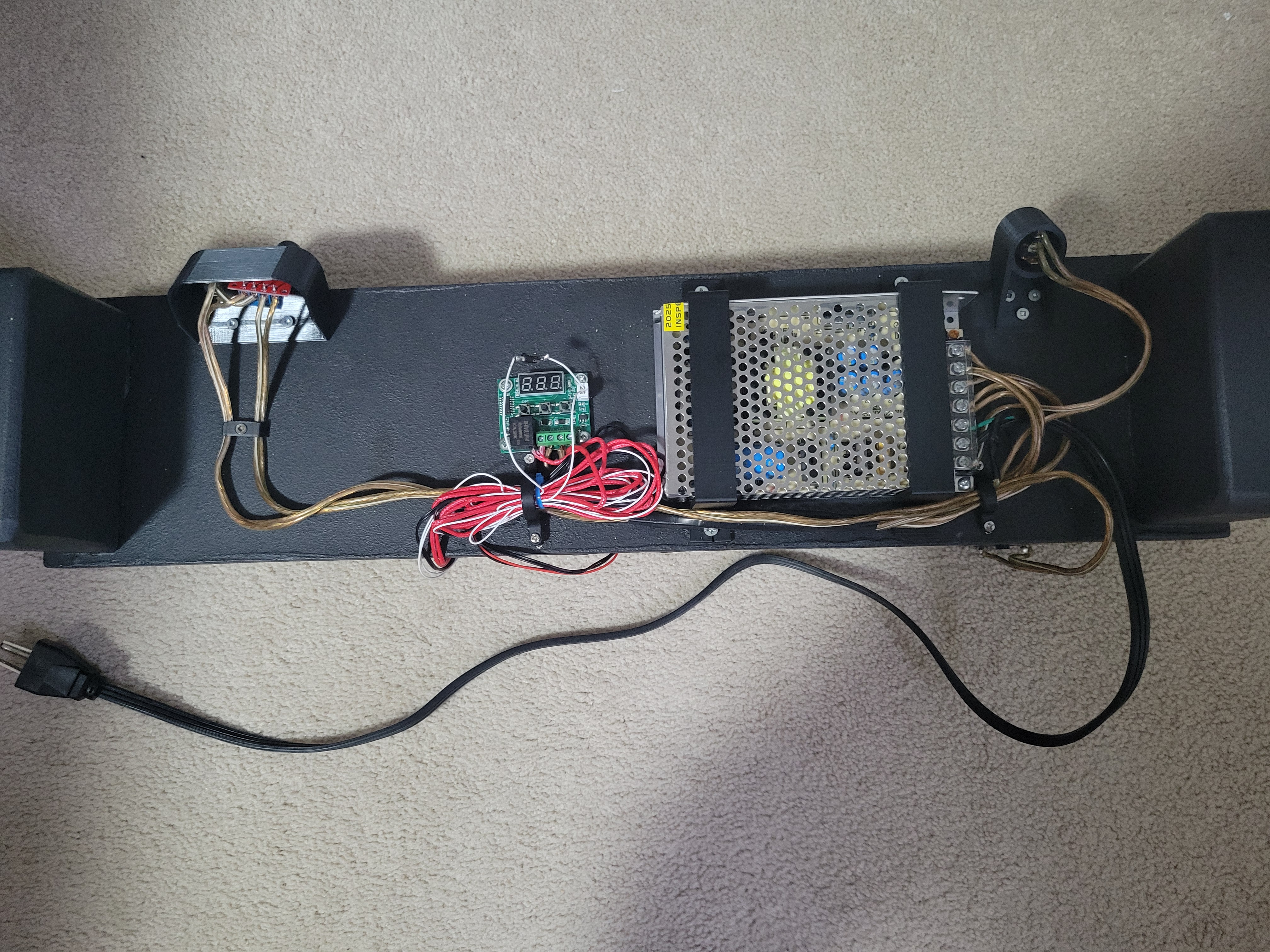
  • Temperature Control: Integrated a W1209 digital controller to maintain nozzle temperature between 240 °C and 260 °C. This was later upgraded to a W3230 for more accurate control and temperature display.

Challenges & Solutions:

  • Uneven Ribbon Thickness: Early tests yielded inconsistent ribbon width; refined blade angle and guiding channel to ensure uniform strips.
  • Nozzle Clogging: PET caramelized at high temperatures; optimized feed rate and added a short cooling zone before the puller.
  • Puller Slip: Initial wheels lacked traction; switched to toothed rollers to eliminate slippage.
Key Components

  • Frame & Cutter: Custom wood and 3D printed chassis holds all modules in rigid alignment. Rotary cutter slices PET bottles into roughly 9mm ribbons.
  • Heater & Nozzle: Interchangeable 1.75 mm nozzle tip; 100 W PTC heater cartridge; thermistor for precise temperature feedback.
  • Puller Motor Assembly: Using a JGB37-520 high torque geared motor. Toothed 3D printed rollers ensure consistent draw without slipping.
  • Temperature Control: W3230 digital controller regulates nozzle temperature via SSR to maintain 240 °C–260 °C.
  • Power Supply: Separate switch-mode supplies: 12 V 10 A for heater and puller motor to ensure sufficient power.
  • Spooling & Collection: Retrofit spool holder attached to chassis; adjustable pull speed prevents slack. Manual tensioner maintains consistent winding.
Heater Cartridge and Nozzle Assembly

Manufacturing Process

Step-by-step guide to transform PET bottles into 3D filament:

1. Preparation

  • Clean & dry each PET bottle to remove labels and residue.
  • Trim bottles into flat panels using a utility knife and scissors.
  • Feed panels through the cutter to produce long 9 mm ribbons.

2. Preheating & Feeding

  • Set W3230 to 80 °C (accounting for thermistor offset) for optimal PET melting without degradation.
  • Slowly feed ribbons into feed tube through the heated nozzle.
  • Wait until nozzle temperature stabilizes within ±3 °C of setpoint.

3. Extrusion & Pulling

  • Once molten PET emerges, engage puller motor at ~3 RPM (≈10 cm/min filament speed).
  • Measure filament diameter with calipers every 30 cm; adjust puller speed to maintain 1.75 mm ± 0.05 mm.

4. Spooling & Drying

  • Spool the filament on the onboard removable spool and remove once finished.
  • Dry the filament using a filament dryer on PETG settings to ensure consistent print textures before use.

5. Testing & Quality Control

  • Print a 20 mm³ calibration cube to check for smooth walls and no under-extrusion.
  • Inspect spool for air bubbles or diameter inconsistencies. Discard any segments outside tolerance.

Results & Performance

After multiple production runs, the Pulltrusion Machine produced filament with:

  • Average Diameter: 1.75 mm ± 0.05 mm
  • Surface Finish: Smooth, minimal layer lines when printing at 250 °C–260 °C.
  • Printability: Successfully printed various parts without stringing.

Cost analysis shows recycled PET filament is roughly one-third the price of commercial filament when accounting for electricity and labor.

Printed Parts Using Recycled PET Filament

Community & Resources

PETamentor Community Builds

The Pulltrusion Machine is part of an open-source ecosystem. Key resources:

Join maker spaces or online workshops—many host build sessions where participants assemble their own Pulltrusion Machines and share tips on feed rates and nozzle optimizations.

Future Improvements & Next Steps

  • Automated Ribbon Feeder: Implement rotary gear feeder to maintain constant ribbon tension and speed.
  • Closed-Loop Diameter Control: Add laser micrometer sensor to monitor filament diameter in real time and adjust puller speed dynamically.
  • Multi-Material Filament: Explore co-extrusion of PET with additives like wood fiber or PLA to create composite filaments.
  • Improved Bottle Cutter: Implement a more robust rotary cutter with adjustable blade angles for different bottle sizes.

These enhancements aim to further increase consistency, throughput, and material versatility for community-driven builds.